Choose familiar company and one known activity. Keep ordinary care in place and leave the dog free to take a break.
In this guide
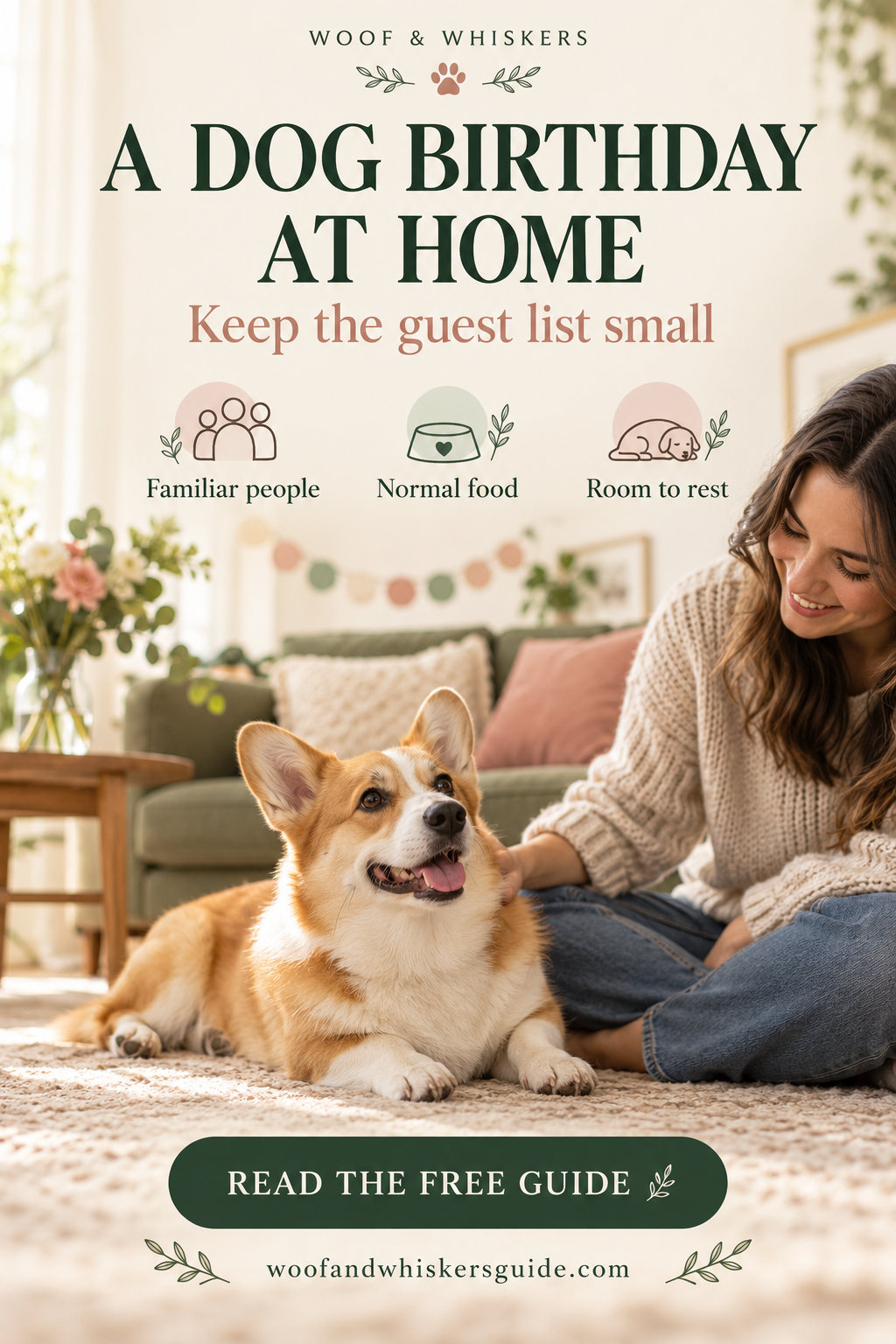
Choose the celebration your dog would use
Think about a recent day your dog seemed comfortable. Was it a quiet walk, a game with one person, or resting close to the household? Build the birthday around that experience rather than around a picture of a party.
If guests are difficult for your dog, invite nobody. A no-party birthday can include a familiar sniff walk and time together at home. You do not need to introduce unfamiliar dogs or a busy new setting just because the date feels special. Make the plan easy to change if your dog seems tired or unwell.
Keep the guest list practical
Choose people your dog already knows and is comfortable around. Tell them the plan in advance: short greetings if welcome, no surprise food, and no following the dog into the resting space. Ask guests to keep bags and food on a designated surface out of reach.
Do not assume dogs who know each other want to share food, toys, or close quarters. If other dogs are involved, plan appropriate separation and supervision with their owners. A household-only celebration is an easier option when you are unsure. Birthday activities should not become a test of tolerance.
Prepare the room and the arrivals
Clear the floor of wrapping materials and small decorations. Keep any decorative items beyond reach and skip balloons or costumes around the dog. Decide who handles the door before the first guest arrives. Keep the normal resting place available.
Set out human snacks where the dog cannot access them, and tell guests where to put finished plates. Have one adult responsible for the dog’s care instead of treating supervision as a shared background job. This is especially useful when someone is taking photos and someone else is bringing things through the door.
Choose one familiar activity
Use a game your dog already knows in a clear space. Keep the first version easy and let the dog leave. If you usually play a gentle search game, use a suitable small amount from the usual food allowance and remove materials afterward.
Avoid competitive food games with several dogs. You can also skip a game entirely and take a familiar walk or sit together. Have a quiet alternative ready before the activity begins. Stopping while everyone is comfortable leaves a better memory than adding another round because the visitors want to keep playing.
Keep food and photos simple
Follow the existing feeding plan. If a suitable familiar wet food naturally holds its shape, a tiny portion can be served as a low birthday mound; our familiar-food cake guide explains the limits. The ordinary bowl works just as well.
Photograph the setup before inviting the dog over. Keep candles and decorative toppers off the plate. Take a quick comfortable picture, then return to the normal meal routine. Do not move the bowl or ask the dog to tolerate handling around food for a better image.
Know what a good finish looks like
Look at the whole dog and the situation, as Dogs Trust recommends when interpreting body language. Offer space if your dog looks uncomfortable. Guests can continue talking while the dog rests elsewhere with appropriate care.
End by clearing food, toys, wrapping, and guests’ bags. Check that the dog’s usual evening tasks still happen. Record one activity they appeared to enjoy and one thing to simplify next time. A few relaxed minutes can be the whole celebration.
Your practical checklist
- Choose one familiar activity.
- Decide whether guests suit your dog.
- Share food and greeting rules.
- Assign door duty.
- Keep decorations away from the dog.
- Protect the usual resting place.
Sources and reading
Source: Dogs Trust: understanding dog body language.
Use the whole body and context to interpret comfort.