If your dog enjoys dressing up, choose a lightweight costume that allows normal movement, sight, breathing and barking. If your dog looks uncomfortable, skip the outfit and use a festive bandana or photo backdrop instead.
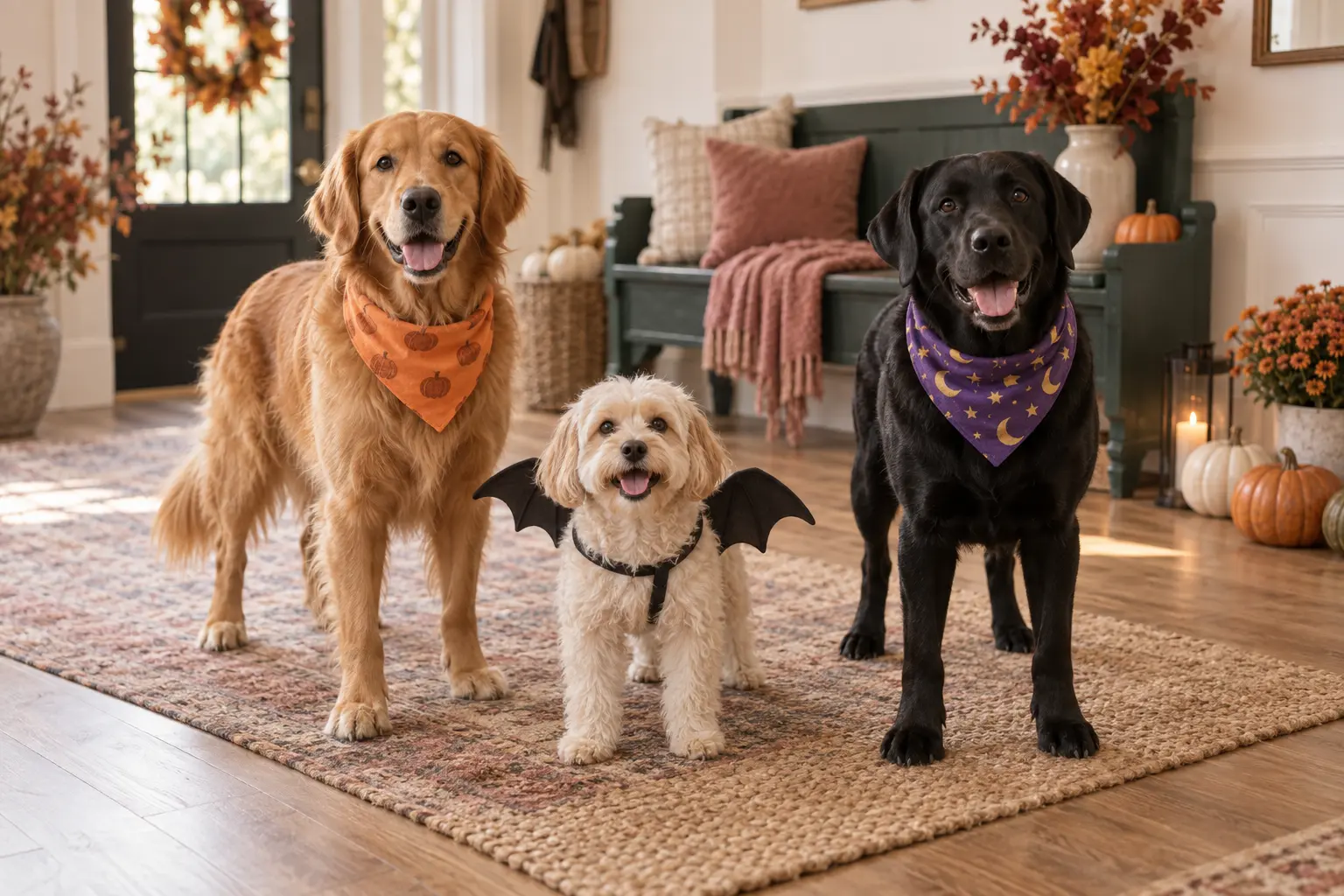
Seven cute costume ideas to adapt to your dog
The safest-looking costume on a product page is not automatically the best choice for your dog. Use these as starting points, then simplify or skip any idea that changes how your dog walks, sees, breathes or behaves.
- Pumpkin bandana: an easy seasonal look for dogs that dislike clothing.
- Soft pumpkin vest: choose a light, adjustable style without dangling pieces.
- Bat wings: keep them small, light and away from the face and legs.
- Witchy bandana: gives the theme without relying on a hat your dog may dislike.
- Cowboy bandana: coordinate colors with the family instead of adding bulky props.
- Bumblebee vest: avoid stiff wings, tight neck openings and detachable decorations.
- Family color theme: match orange, black or purple accessories while letting your dog wear only a comfortable bandana.
Our costume-type recommendation: begin with a soft pumpkin bandana or a lightweight adjustable vest. They are easier to fit and supervise than headpieces or costumes with multiple attachments. We are not linking a specific costume until we can verify a current listing and sizing chart.
Measure before you choose a size
Use a soft tape measure and follow the seller’s current sizing diagram. Record the neck where the item will sit, the widest part of the chest, the back length requested by the chart and your dog’s weight if the listing uses it.
Do a short trial before Halloween
- Let your dog sniff the costume first.
- Try it indoors for a brief, supervised period.
- Check that your dog can walk, sit, turn and lie down normally.
- Remove it immediately if your dog freezes, paws at it, pants unusually or tries to hide.
Do not choose a size from breed alone. Two dogs of the same breed can have very different proportions, and size names vary between sellers.
Use this costume safety check
- Movement: the outfit does not restrict walking or sitting.
- Face: nothing blocks sight, breathing or barking.
- Fit: the costume is secure without being tight around the neck or chest.
- Pieces: there are no small, dangling or easily chewed-off decorations.
- Temperature: your dog is not becoming too warm.
- Supervision: the costume comes off whenever you cannot watch your dog.
The ASPCA advises skipping a costume unless you know your pet enjoys it and recommends a festive bandana when an animal appears distressed. That is not a failed costume—it is good dog handling.
Plan for the doorbell, candy and the evening walk
Keep chocolate, sugar-free sweets containing xylitol, raisins, wrappers, glow sticks and small decorations out of reach. Repeated visitors and costumes at the door can be stressful, so prepare a quiet room or another secure setup before trick-or-treating begins. Confirm that your dog’s ID is current.
If you walk after dark, keep your dog securely leashed and use a familiar route. A light-up harness can make a dog easier to see, but it does not replace attentive handling, identification or a conventional leash.
Source: American Kennel Club: Halloween hazards, costumes and outdoor safety.
Make a Halloween photo without sharing the candy
Use a plain autumn backdrop, natural light and one short photo session. Reward your dog with their normal treat or a veterinarian-approved dog treat—never candy made for people. If your dog walks away, the session is over.
A silicone mold can make simple frozen dog treats look seasonal, but the mold is only a shaping tool. Use ingredients already suitable for your dog, introduce nothing new on a busy night and count treats as part of the day’s food.
Your next small step: decide whether your dog actually enjoys wearing anything. If the answer is no, choose the bandana or backdrop option and call it done.