For ordinary mud, start with a washable mat, clean water and a soft towel. A paw-cleaner cup is optional, not an essential purchase.
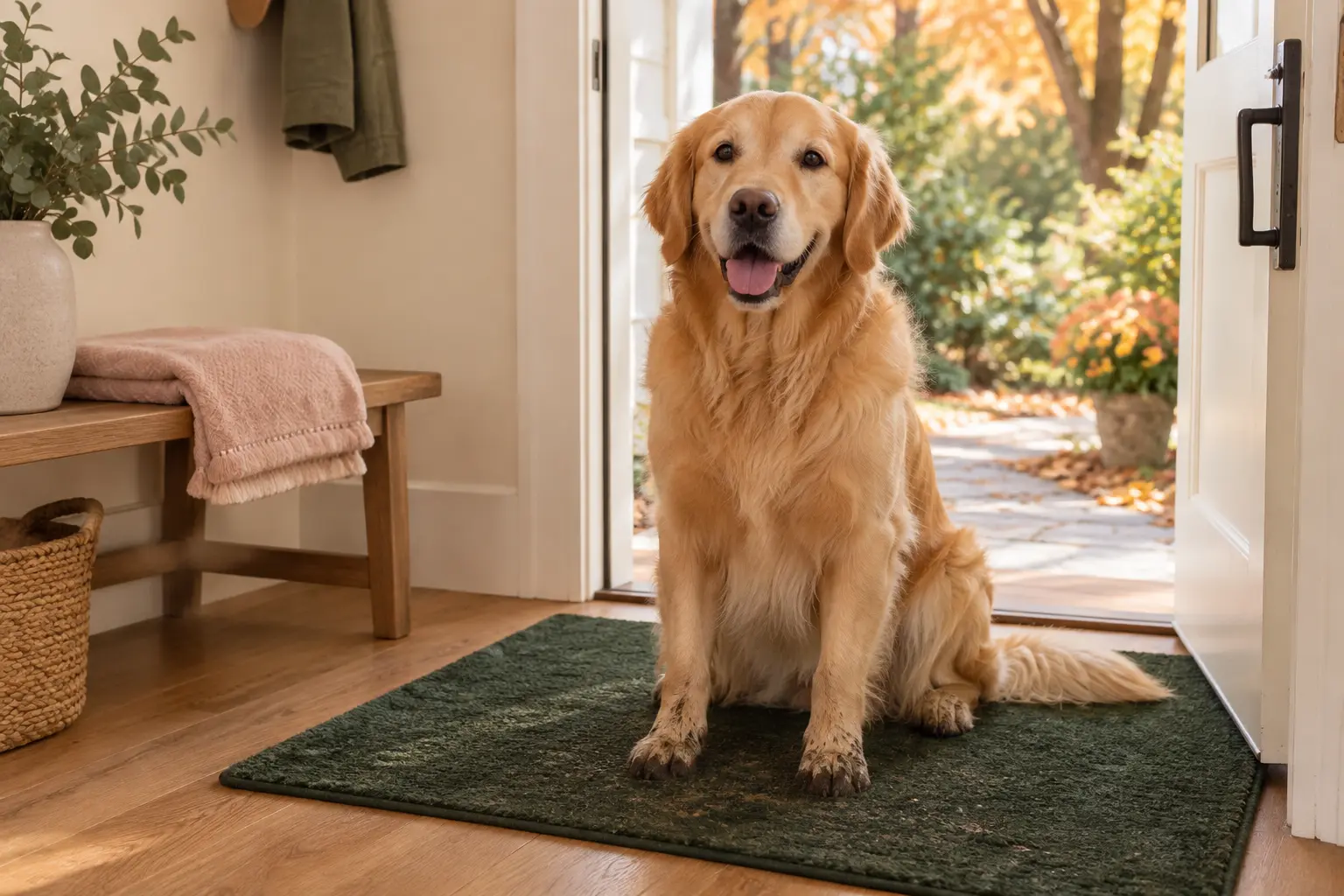
1. Give cleanup a home by the door
Choose the entrance you actually use after walks. Place a washable mat there and keep two towels within reach: one for the first pass and a clean, dry one for finishing. Put a bowl or cup nearby only if you find it useful. Your existing supplies are a perfectly reasonable starting point.
Try this layout: a towel basket on the clean side of the mat, water within your reach, and a separate spot for damp towels. When your hands are occupied with a leash, having everything in one place matters more than having a matching set.
Prepare before you leave. Otherwise, the moment you need a towel is also the moment you need to cross the floor to find one.
2. Match the cleanup to the mess
If paws are wet but not dirty, a soft towel may be enough. For visible mud, use lukewarm water and a gentle wipe, checking between the toes for trapped debris. Dry the paws carefully afterward, including between the toes. Avoid household cleaning wipes and harsh detergents on your dog.
Support a paw without pulling the leg into an awkward position. If your dog pulls away, pause and make the next attempt shorter. Cleanup should not become a wrestling match.
Source: American Kennel Club: cleaning and caring for dog paws.
3. Towel or paw-cleaner cup?
Start with a towel if…
- Your usual problem is wet footprints or a little dirt.
- You want fewer things to wash and store.
- Your dog is more comfortable with a gentle wipe.
Consider a cup if…
- Your regular route leaves paws covered in mud.
- Your dog tolerates placing a paw inside it.
- You are willing to rinse and dry the cleaner after use.
A cup still needs a drying towel. Check the actual opening and the seller’s sizing guide before ordering; your dog’s breed alone is not a size measurement. Follow the instructions for that exact product, use clean water, and stop if the experience is uncomfortable for your dog.
4. Reset the station for the next walk
Empty dirty water, clean the equipment according to its instructions, and leave everything to dry. Replace used towels with clean ones. A cleanup station only helps if it is ready when you return.
Keep a small note for anyone else who walks your dog: which door to use, where the towels live, and what handling your dog is comfortable with. Add it to your dog sitter’s care instructions so the routine stays consistent.
When it is more than ordinary mud
Limping, bleeding, swelling or persistent licking deserves veterinary advice. Do not keep scrubbing a painful paw or use a cleaning gadget as treatment. If you suspect contact with a chemical or another harmful substance, contact a veterinarian promptly for guidance.
Your next small step: put one clean towel beside the door today. Try that setup before buying anything new.