Choose a familiar, well-lit route; check your leash, harness and ID; and carry a light. Reflective or light-up gear is an extra visibility aid, not a substitute for careful handling.
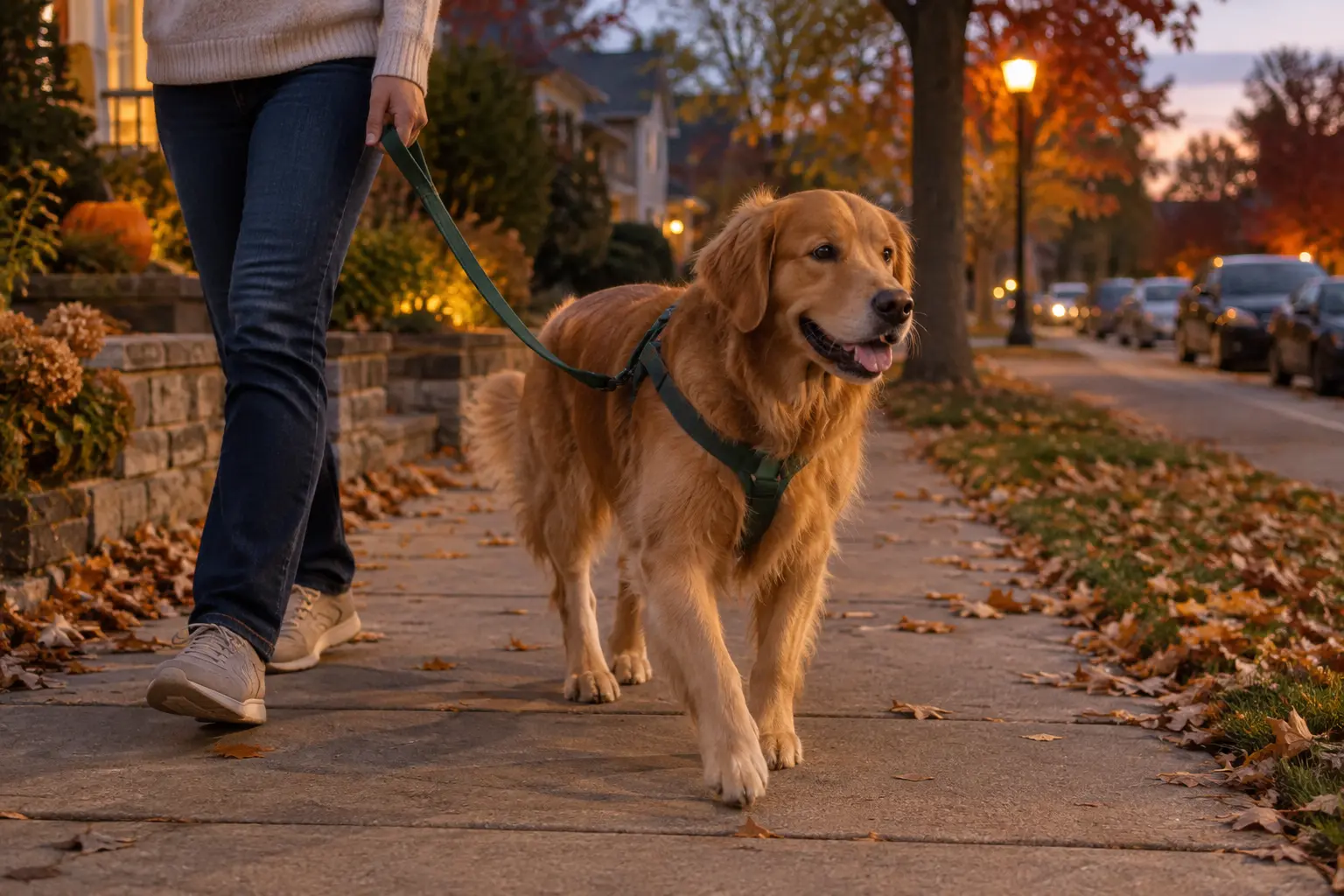
Do a quick check before opening the door
- Fit: check your dog’s collar or harness according to its fitting instructions.
- Fastenings: inspect the leash clip, buckles and worn sections.
- ID: confirm the tag is attached and your contact details are current.
- Light: carry a working flashlight or headlamp so you can see the path.
- Supplies: bring waste bags and a charged phone.
- Route: choose a familiar path with usable lighting and room away from traffic.
Try keeping the small items together beside the leash. A simple departure routine reduces the chance of realizing something is missing halfway down the street.
Think about seeing and being seen separately
Your flashlight helps you inspect the path. Reflective material is designed to return light that hits it; powered lights create their own light. Neither tells you that a driver has noticed you or that a crossing is safe.
The American Kennel Club recommends considering reflective leash material for night walks near roads and notes that thin retractable cords can be hard to see in darkness. Keep your dog close enough to manage comfortably around driveways and crossings.
Source: American Kennel Club: choosing a dog leash.
Check your own visibility too. A visible dog beside a dark-clothed person is only part of the picture. Pause somewhere safe if you need to adjust equipment or use your phone.
Would a light-up harness be useful for your walks?
It may be worth considering if walking after dark is a regular part of your routine. It may be unnecessary if your walks happen in daylight or your existing setup already fits your needs. Start by identifying the actual problem you want to solve.
Check before you buy
- Measure chest girth and compare it with the current size chart.
- Consider charging, care and how the gear fits with a coat.
- Check the intended weather conditions and water limitations.
- Plan a short, supervised introduction before a full walk.
Keep the first evening outing simple
A quiet, familiar loop gives you a chance to notice what is different after dark. You do not need a longer route just because you bought new equipment. If your dog seems uncomfortable, shorten the outing and choose a calmer time or place.
If someone else is walking your dog, include the route and equipment instructions in your sitter handoff. After a wet walk, a small cleanup station by the door can make the return easier.
Tonight’s small step: check the leash clip and charge the light before you need them.