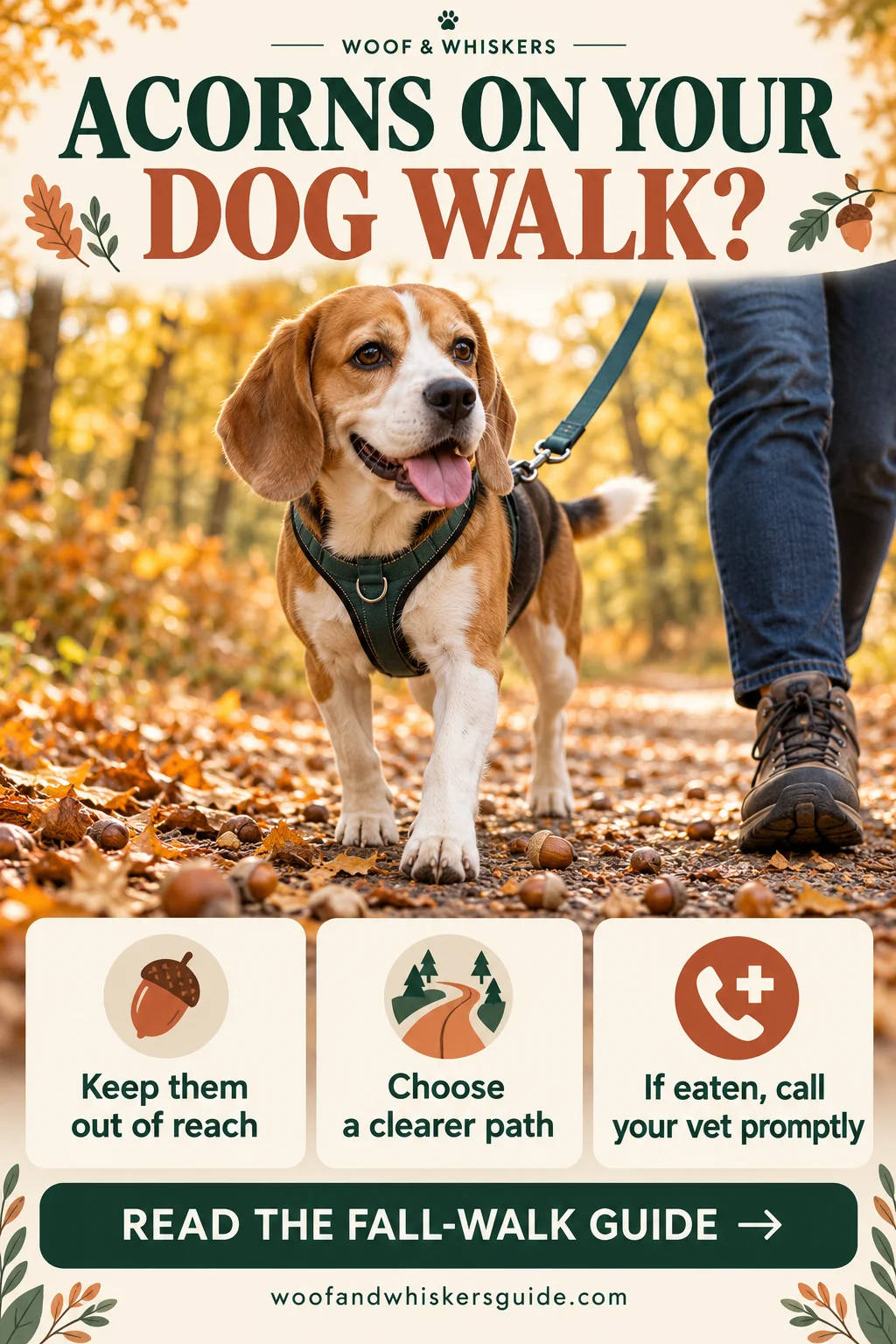
Keep dogs from eating acorns. If you think your dog swallowed them, contact your veterinarian promptly; do not wait for symptoms or try to make your dog vomit unless a veterinary professional directs you.
In this guide
Why are acorns a concern?
Acorns contain tannins that can harm dogs. Swallowed nuts can also pose a choking or blockage risk. The American Kennel Club recommends contacting a veterinarian promptly if a dog may have eaten acorns. The amount, the dog and what happened all matter; an online article cannot decide whether a particular exposure is safe.
Recognizing an oak tree can help you notice a route that needs attention, but you do not need to identify every tree before taking a sensible precaution. If the ground is covered in unknown nuts, choose a clearer walking area and keep your dog from collecting them.
A small check before the walk
- Look at the first stretch. Notice where nuts are concentrated, including the edge of the sidewalk and beneath trees.
- Choose room to move. Use a clearer path rather than spending the outing pulling your dog away from the same patch.
- Check the equipment. Use a secure leash and comfortable, correctly fitted collar or harness.
- Share the route. Tell a family member or walker which section you are avoiding.
This is a route-planning habit, not a test of obedience. Practice any familiar “leave it” cue separately with appropriate reward-based guidance. Do not deliberately place acorns near your dog as a training challenge.
If your yard is affected, inspect the dog’s usual bathroom and play areas too. Choose one manageable spot to clear and supervise access rather than assuming a single sweep removes every nut.
If your dog may have eaten acorns
Contact your veterinarian promptly. Explain what you saw, roughly when it happened, how much may have been swallowed and your dog’s approximate weight. Mention any changes you have noticed. Do not delay the call while trying to count every missing acorn.
Do not give a home remedy or induce vomiting without veterinary direction. If your dog has trouble breathing, collapses or appears severely unwell, seek emergency veterinary care immediately.
A simple way to explain what happened
“I saw my dog pick up acorns near an oak tree at about ___. I am not sure how much was swallowed. My dog weighs approximately ___. These are the changes I have noticed: ___.”
This is a communication prompt, not a treatment checklist. Follow the veterinary team’s instructions about what to do next and what, if anything, to bring.
Make the next outing easier
Keep a brief walking note: Problem spot: ___ · Clearer route: ___ · Who else needs to know: ___. A specific route name helps a sitter more than “watch out for things on the ground.”
For darker evenings, use our night-walk checklist. After wet outings, the paw-cleanup guide explains how to choose a gentle cleanup method.
Start now: check one section of the usual route before the next walk.