Prepare supplies for several days, keep current records and contacts accessible, and make sure your household knows where the bag lives.
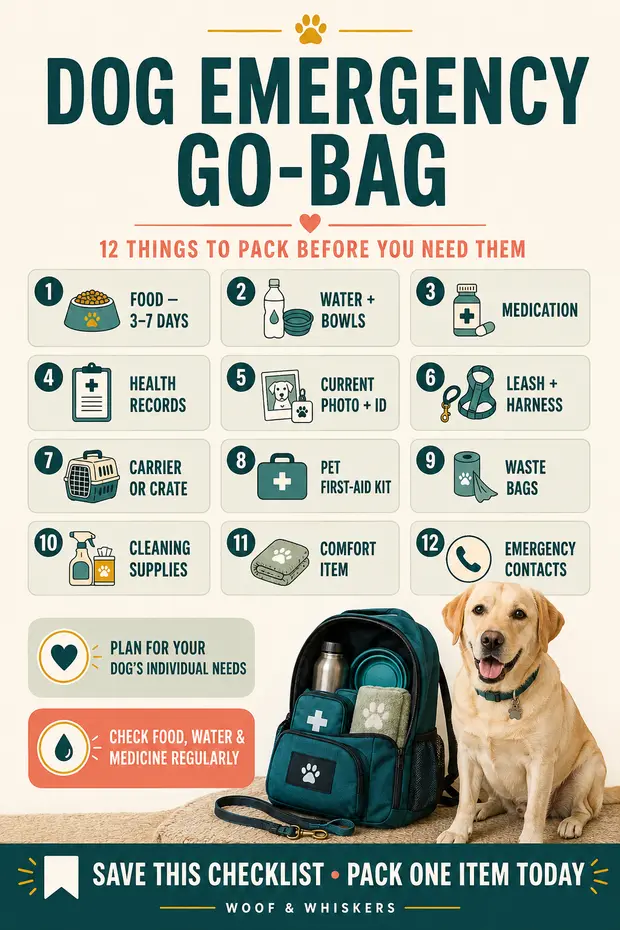
Start with the essentials
- Food, drinking water and bowls for several days.
- Needed medication and copies of care instructions.
- Veterinary records, current photos and ID information.
- A secure leash, harness and suitable carrier if needed.
- Waste bags, cleanup supplies and a familiar comfort item.
- Contact details for veterinary care and a backup caregiver.
Source: Ready.gov: include pets in your emergency plan.
Ask your veterinary practice how to prepare and store medication that has special requirements. Make a separate reminder for essentials that cannot live permanently in the bag.
Choose a location you can describe in one sentence
“The labeled bag on the lower hall shelf” is more useful than “somewhere in the spare room.” Choose an accessible location, away from anything that could damage the supplies. Tell the people who might need to use it.
Put a list of the contents near the top. If you borrow something for an ordinary outing, leave yourself a replacement reminder instead of assuming you will remember later.
Review it as your dog’s needs change
Check expiry dates, fit and contact information regularly, and after a change in food, medication or care arrangements. Growing puppies can outgrow equipment; an emergency bag is not a one-time purchase.
Pair the bag with clear caregiver instructions. Supplies answer “what do I need?” A care sheet answers “what do I do with it?”
Do one thing today: choose the bag’s home and add current veterinary contact details.