Try your existing pocket or washable bag first. If reward access keeps interrupting practice, compare one-handed access, secure attachment and cleaning. A pouch carries rewards; it does not teach loose-leash walking on its own.
In this guide
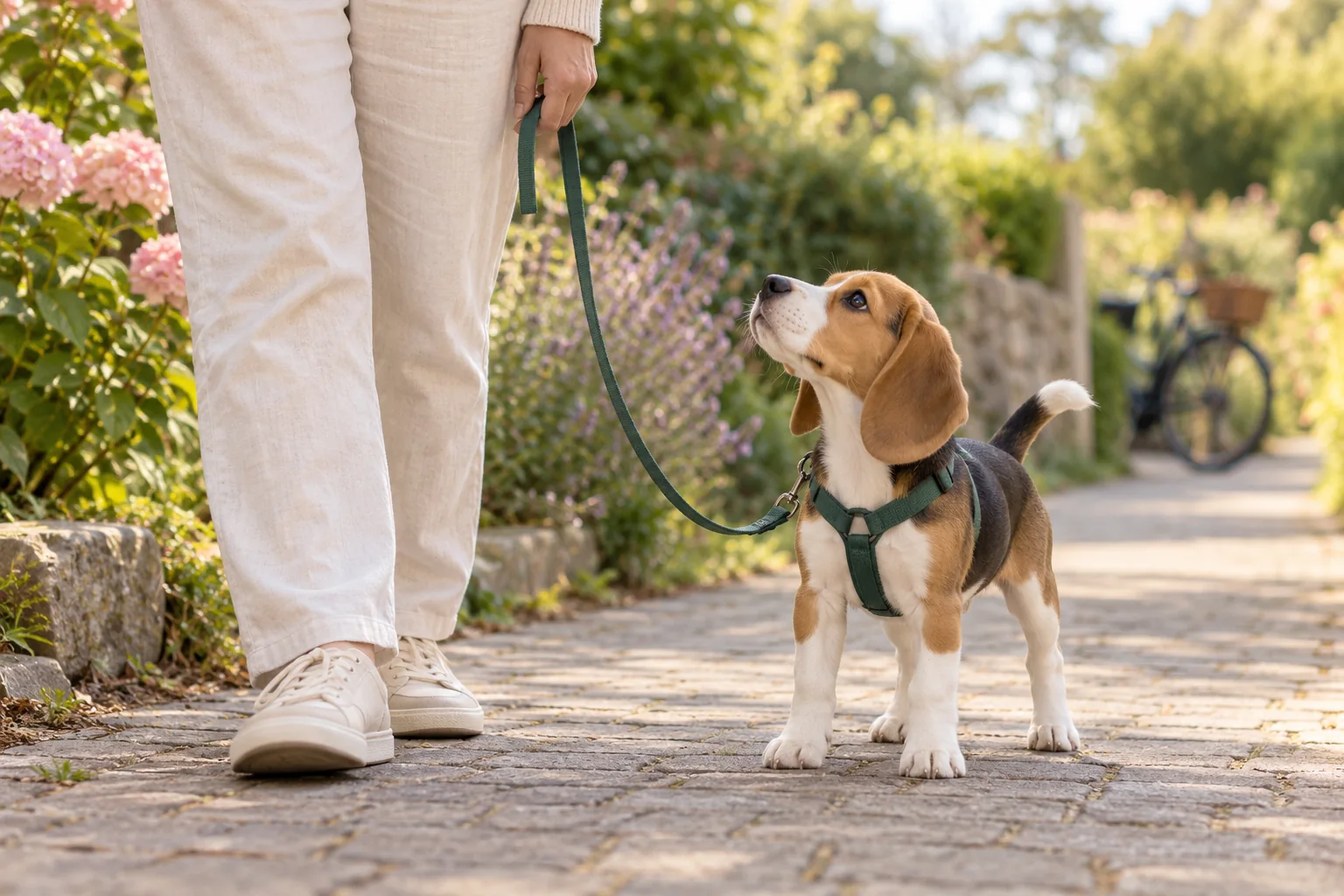
Try a pocket before buying a pouch
For a short practice at home, a clean pocket may already work. Put keys and your phone somewhere else, prepare a small amount of food your dog normally tolerates, and try reaching it while standing comfortably. You are checking your setup, not testing how long your dog can wait.
If the pocket catches your hand, leaves crumbs in clothing or becomes difficult to reach beneath a jacket, write down that specific problem. It gives you a better shopping brief than looking for the bag with the most accessories. A small washable bag you already own is another reasonable starting point.
Keep rewards out of the dog's reach between sessions. Empty the container afterward; a training pouch is not a substitute for appropriate food storage. Use the same reward and feeding plan you already follow rather than adding extra food simply because a bag has room.
Compare the opening, attachment and cleanup
| Design | Useful question | Trade-off to consider |
|---|---|---|
| Existing pocket | Can I reach a reward without searching? | Crumbs and damp food may make clothing harder to clean. |
| Drawstring pouch | Can I manage the cord while holding a leash? | Check how easily you can reopen it after closing. |
| Hinged pouch | Does the opening stay accessible during practice? | Check the closing action and comfort against your body. |
| Magnetic pouch | Can I reach the opening and close it easily? | Compare the actual mechanism and attachment, not the label alone. |
Look at the dimensions beside an object you know. Check whether the belt fits over the clothing you actually wear, and whether a clip has a suitable place to sit. A large front pocket can be useful, but a full phone-and-keys load may feel different from an empty product photograph.
Decide what must stay separate from food. Waste bags, keys and a phone need their own space. Choose a cleaning routine you can maintain, and follow the instructions supplied with the exact item. Listing dimensions and care wording can differ between variants.
One option: PetSafe Treat Pouch Sport
Source: PetSafe: Treat Pouch Sport features and care.
Product identity and the manufacturer's page checked October 28, 2026. Prices, delivery, seller and stock vary; check the live Amazon listing for your location. We have not tested its comfort, closure or durability.
Use the pouch in a small practice session
- Prepare before leaving. Choose appropriate rewards and attach the pouch where you can reach it without twisting.
- Keep your hand free between rewards. Avoid spending the whole walk rustling in the bag.
- Choose an easy setting. Practice a few comfortable steps in a quiet place before adding distractions.
- Check the setup afterward. Note whether attachment, access or cleaning needs a change.
The pouch is only an organizational tool. If practice becomes difficult, change the setting or simplify the exercise rather than expecting different equipment to fix it. Our beginner loose-leash routine explains a gentle place to start.
Shopping note: Opening: ___ · Attachment: ___ · Comfortable belt range: ___ · Food and belongings separated: ___ · Cleaning method: ___. Use that list to rule out unsuitable options before comparing extras.