Updated
Reward your dog for walking near you with a loose leash, build movement gradually and pause calmly when the leash tightens. Never jerk the leash. If the environment is too difficult, create distance and try an easier setting.
In this guide
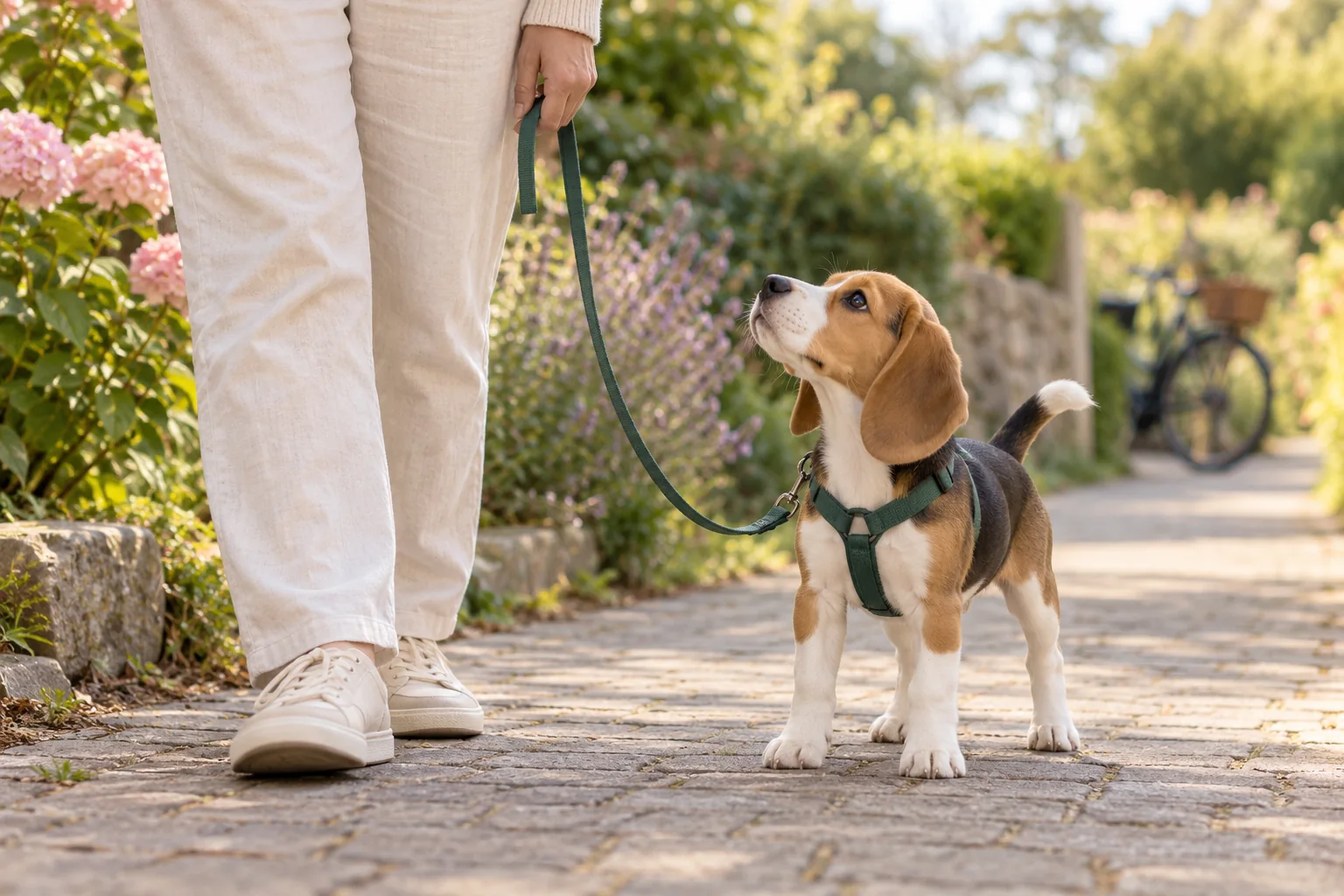
Choose a setup you can repeat
Use comfortable, well-fitted equipment and a secure leash. Dogs Trust recommends beginning in a quiet place, rewarding the dog beside you and adding movement before gradually increasing distractions. Introduce unfamiliar equipment gently before using it on an outing.
Choose a small practice area with space to turn. Have suitable rewards ready so you do not have to rummage while your dog waits. Indoors or in an appropriate secure garden, you can rehearse your own timing without traffic, crowds or a destination deadline.
You do not need a new harness just to start if the equipment you already own fits safely. Ask for help with fitting if it slips, rubs or limits comfortable movement.
Source: Dogs Trust: comfortable equipment and gradual loose-leash training.
Try a short practice card
The following is an example you can adapt. A few minutes is a planning suggestion, not a deadline for learning.
- Begin standing still. Reward your dog for choosing to be near your side with slack in the leash.
- Take one or two steps. Reward nearby while the leash remains loose.
- Pause and reset. Give yourself time to prepare the next reward.
- Repeat an easy stretch. Add steps only when the previous stretch is comfortable.
- Finish deliberately. End the practice and offer a suitable break rather than continuing until both of you are frustrated.
Keep the task small enough that you can notice success. “Three easy stretches in the hallway” is easier to repeat than “make this entire walk perfect.” Write down where you practiced so you can begin at the same difficulty next time.
What to do when the leash tightens
In a safe setting, pause calmly instead of moving forward under tension. Resume when the leash is slack. Avoid leash jerks or scolding. Dogs Trust recommends stepping back to an easier stage when distractions make the task difficult.
Safety comes first: do not remain frozen in a road or keep your dog close to something frightening just to follow a training rule. Move to safety and create space. Then decide whether to continue or end the session.
Reward-based methods are the approach recommended by AVSAB. Equipment that relies on pain or fear is not a shortcut to the skill you want.
Source: AVSAB: humane dog training guidance.
Change one thing when practice is difficult
| What happened? | What to try next |
|---|---|
| Good indoors, difficult outside | Use a quieter outdoor location and shorten the distance |
| You keep missing reward moments | Prepare rewards before moving and practice fewer steps |
| Passing dogs take all the attention | Create more distance and choose a quieter time |
| The session becomes a tug-of-war | Stop the exercise, check comfort and simplify |
Record only one change per practice if you want to understand what helped. For example: “Same route, earlier time, fewer people.” A single better walk is encouraging, but it does not show that a technique works in every setting.
Make room for ordinary walks too
Allow enough time for bathroom needs and appropriate sniffing rather than treating every outing as a strict heel exercise. Agree on the same simple practice approach with other caregivers. Avoid adding distance, distractions and duration all at once.
Keep a brief note: Location: ___ · Easy distance: ___ · Distraction: ___ · Next practice: ___. You can reuse a notebook; a special training journal is optional.
Sudden reluctance to walk, apparent pain or a marked change in movement needs veterinary attention. For persistent lunging, fear or handling difficulty, seek individualized help from a qualified reward-based professional.
Next step: practice a few easy steps in one quiet place. For evening outings, follow our night-walk checklist before leaving home.
If reaching rewards interrupts practice, compare your existing pocket with the options in our treat-pouch buying guide. Extra equipment is optional.