Give your puppy a choice to approach or retreat, reward comfortable observation, and keep new experiences brief. Ask your veterinarian which outings and classes suit their vaccination status and local disease risks.
In this guide
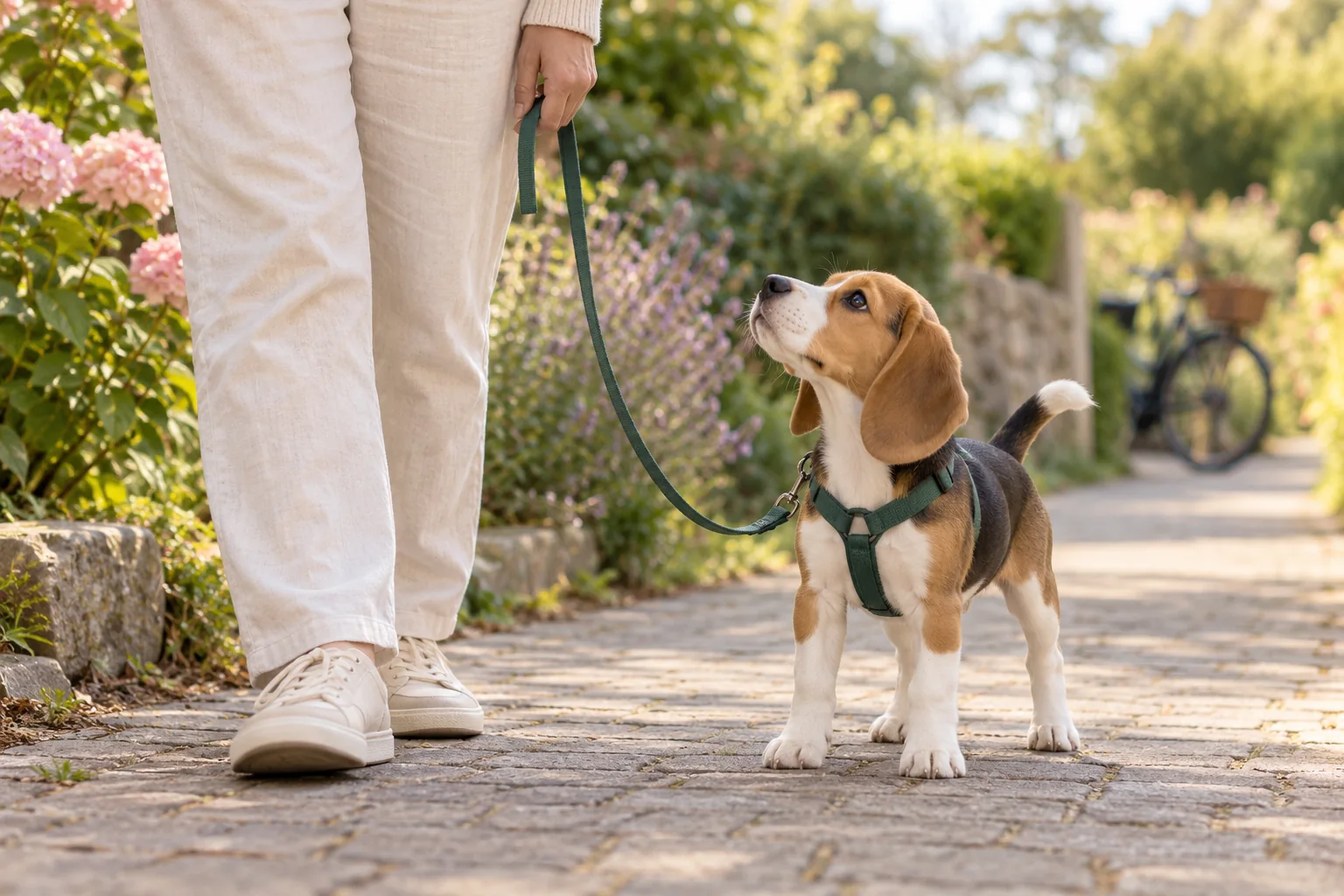
Think beyond meeting other dogs
Socialization includes ordinary sights, sounds, surfaces and handling experiences. The RSPCA recommends positive, short sessions with choice and a chance to retreat. Calmly watching something new is a worthwhile experience; there is no greeting quota to complete.
Make a list based on your actual life. An apartment puppy may eventually encounter elevators, rolling luggage and hallway sounds. A dog in a quieter home may need gentle introductions to delivery carts or visiting relatives. Your list should help you plan, not pressure the puppy to finish it.
Ask about safe settings before planning outings
AVSAB emphasizes early, safe socialization and carefully managed exposure. That does not mean every public place is suitable for every puppy. Ask your veterinarian about your puppy’s health, vaccine history, local risks and suitable classes before deciding where to go.
Take three questions to the appointment: “Where can we practice now?”, “Which dogs or classes are appropriate?”, and “What changes after our next visit?” Write the advice beside your activity list so the household follows the same plan. Do not copy a vaccine timetable from an online article into your dog’s care record.
Use a small observation routine
- Choose one experience. For example, an adult wearing a hat in a familiar room.
- Start easy. Have the adult sit at a comfortable distance, without leaning over or reaching for the puppy.
- Let the puppy notice. Offer an appropriate reward while they remain comfortable. Looking and then turning back to you is enough.
- Make space. Let them move away. If worried, stop and make the next attempt easier.
- Write one observation. Record what the puppy actually did rather than checking a vague “done” box.
This is an example routine, not a test or a fixed timetable. An easy experience can end quickly. Repeating something familiar on another day is a reasonable choice.
Three ordinary experiences to plan at home
| Experience | Easy starting point | A useful note |
|---|---|---|
| A visitor | One quiet adult seated at a distance | Watched, approached or chose to leave? |
| A household object | A stationary bag placed well away | Which distance felt comfortable? |
| A new surface | A stable nonslip mat beside familiar flooring | Voluntarily stepped on or preferred the floor? |
Keep routes clear and remove items the puppy may chew or swallow. You are offering a choice, not luring a worried puppy closer with food. A reward should support comfort; it should not become a reason to trap them near something frightening.
Keep a log of comfort, not a scorecard
Use four headings: Experience · Starting distance or intensity · What I saw · Next step. Example: “Visitor with hat · Across living room · Puppy watched and returned to bed · Repeat the same setup another day.” That note tells you more than “met a visitor.”
Try this boundary with strangers: “We’re practicing watching today, thank you.” You do not need to apologize for declining a greeting. Tell family members to use the same phrase so the puppy gets a predictable experience.
If your puppy repeatedly hides, freezes, tries to escape or remains distressed, stop the exercise and discuss it with your veterinarian or a qualified reward-based behavior professional. More intense exposure is not the solution.
Your next step: choose one easy experience and write a single observation. Our first-week guide helps you keep that practice alongside rest and everyday care.