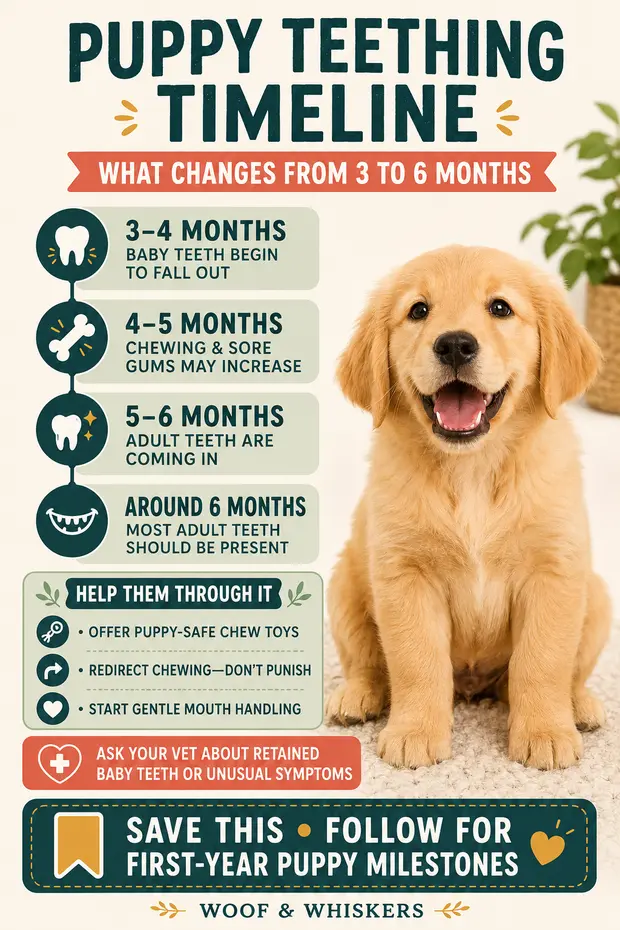
Baby teeth commonly start shedding around 12–16 weeks, and most adult teeth are present by about 6 months. Your veterinarian can check your puppy’s individual development.
The broad timeline
During the 3–4 month period, owners may begin noticing baby teeth falling out. Adult teeth continue coming through over the following months. By roughly six months, most puppies have their adult teeth. Timing varies, so an age range is more helpful than a countdown.
Make redirection easier
Keep an appropriate puppy chew within reach in the rooms you spend time in together. When chewing begins on something unsuitable, calmly redirect to the permitted item and supervise. Ask your veterinary team about chews suitable for your puppy; remove items that become damaged or small enough to swallow.
Instead of buying a basket of toys at once, try a small selection and notice what your puppy uses comfortably. The useful purchase is the one that fits the puppy in front of you.
Keep a short note, not a complicated diary
A useful note might include the date, what changed and whether eating or behavior changed too. A clear photograph can help you describe a concern to the veterinary team, but do not force your puppy’s mouth open to take one.
Ask your vet about a baby tooth that remains alongside an adult tooth, difficulty eating, significant pain or anything else that worries you. Do not try to pull a tooth yourself.
Keep those notes with your care records. Our first-week starting point explains a simple way to organize important information from the beginning.