Measure your dog while standing naturally: back length, chest girth and neck girth. Follow the exact manufacturer’s measuring diagram, compare the units and check fit and movement before a full outing.
In this guide
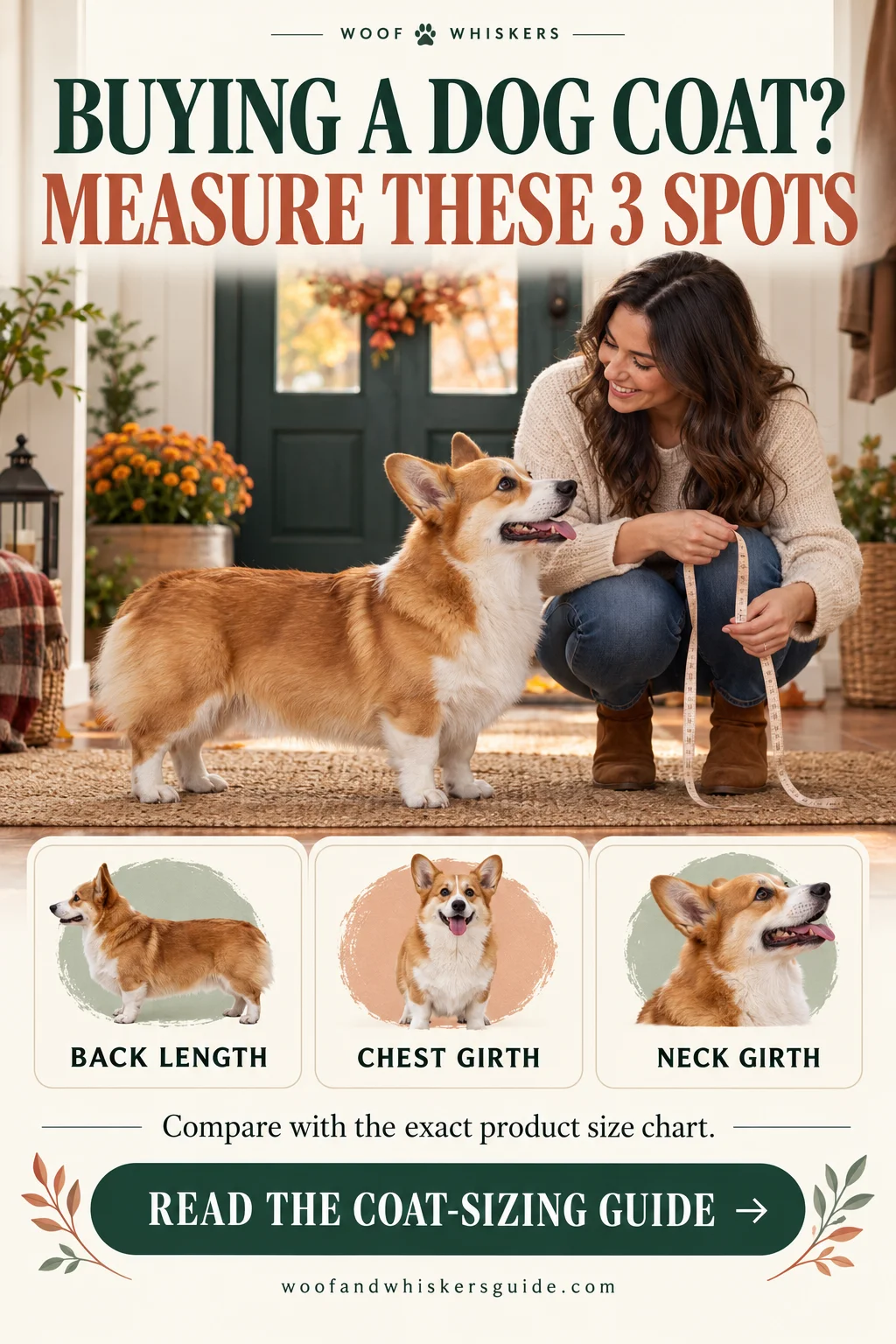
Make measuring a comfortable short task
Choose a quiet place with nonslip footing and use a flexible measuring tape. Let your dog stand naturally rather than stretching into a pose. Work calmly and pause if your dog is uncomfortable; measuring can happen in more than one short attempt.
The AKC identifies back, chest and neck as the key measurements for dog clothing and recommends comparing them with the individual product’s size chart. A familiar breed or weight category does not replace that comparison.
Record three measurements
| Measurement | General starting point | Check before choosing a size |
|---|---|---|
| Back length | Along the back from the base of the neck toward the base of the tail | Does this brand use those exact start and end points? |
| Chest girth | Around the broadest part of the chest, generally behind the front legs | Is the chart giving body measurements or finished garment dimensions? |
| Neck girth | Around the neck where the garment opening will sit | Is there an adjustable opening, and what does the fitting guide say? |
These are starting descriptions, not a universal sizing diagram. Keep the tape comfortable and follow the product’s instructions about allowance. Do not add or subtract a fixed amount for every brand.
Compare numbers rather than size names
- Check the exact model. Two coats from one brand can use different charts.
- Check units. Write inches or centimeters beside every number; do not compare an unlabeled note with a chart.
- Read all dimensions. A suitable back length alone does not establish a comfortable chest fit.
- Read the manufacturer’s advice. If dimensions fall between sizes or across different rows, ask the seller or manufacturer rather than assuming a universal size-up rule.
- Review returns. Know the seller’s current policy before ordering.
Also check the coat’s intended use. A rain layer and an insulated winter garment solve different needs. Ask your veterinarian about your individual dog’s requirements if you are unsure whether clothing is appropriate.
Check the real garment before a full walk
Introduce the item in a familiar setting and follow its fitting instructions. Check that your dog can move comfortably and that fastenings, leg openings and edges do not rub or restrict movement. Confirm access to the leash attachment without improvising how equipment connects.
Pause if your dog freezes, avoids the garment or appears uncomfortable. Recheck fit and suitability before trying again. Good measurements help with shopping; they do not prove that every garment will suit your dog.
Keep a reusable measurement note
My dog’s coat-shopping note
Date: ___ · Back: ___ · Chest: ___ · Neck: ___ · Units: ___.
Coat model: ___ · Chart checked on: ___ · Body or garment dimensions: ___ · Questions for the seller: ___.
Remeasure a growing puppy and check the chart again when changing models. Save the product instructions with your order details so another caregiver can fit the item correctly too.
This guide does not recommend a specific coat. The checklist works with the equipment and retailer you choose. For the next outing, use our night-walk preparation guide and muddy-paw cleanup comparison.