A lick mat offers food across a textured surface; a compartment puzzle adds movable covers or pieces. Begin with accessible food, stay present and stop if your dog chews the equipment. A simple supervised food search is a useful no-purchase alternative.
In this guide
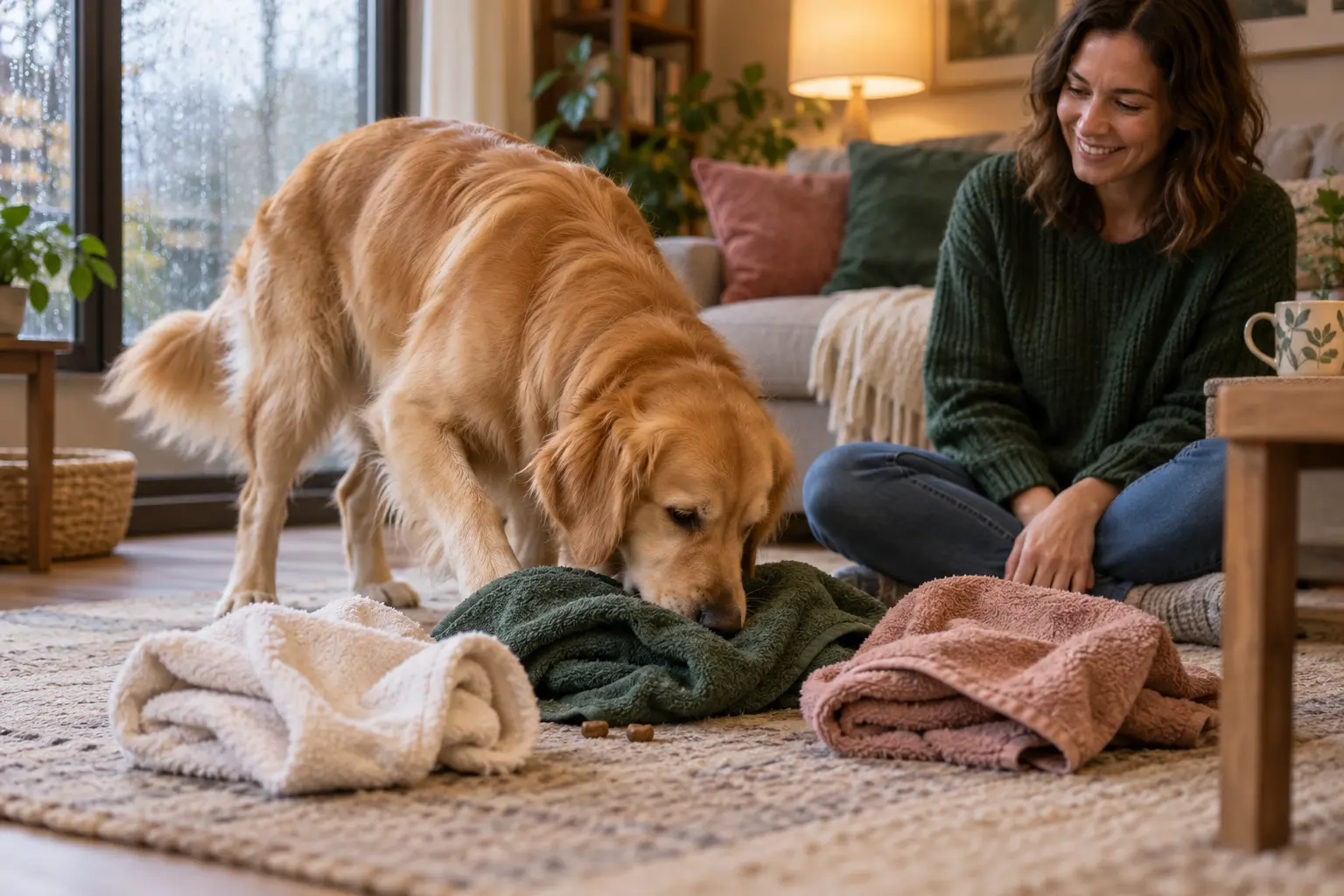
Start with the action your dog enjoys
Watch an easy food search before ordering a new object. Does your dog enjoy looking for visible pieces on a clear surface, or gently exploring a simple food toy they already know? Keep the activity easy enough for a comfortable success. Walking away is useful information, not a reason to increase the challenge.
Think about your part of the routine too. Can you stay nearby? Can you wash the grooves or compartments after use and inspect them before the next session? Where will the clean, dry object live? A design that fits those ordinary tasks is more useful than one that only looks interesting in a photograph.
Compare three ways to offer a food activity
| Option | What the dog does | What you need to check |
|---|---|---|
| Simple food search | Finds a few accessible pieces on a clear surface. | Use suitable food and a clean area; supervise and keep other pets separate. |
| Lick mat | Reaches food from a textured surface. | Food suitability, mat condition, cleaning and whether the dog tries to chew it. |
| Compartment puzzle | Finds food under or beside covers and moving parts. | Size, removable pieces, easiest setup and the dog's handling of the parts. |
Difficulty numbers are product labels, not intelligence scores. There is no need to make every session harder. If your dog enjoys a simple setup, repeating it can be enough. Choose a design that adds something useful to your routine, rather than buying several at once.
Source: AVSAB: choose suitable designs, start easy and supervise food activities.
A mat option to compare: LickiMat Classic Buddy and Soother
Source: LickiMat: official U.S. retailer links.
Retailer destination checked October 28, 2026. Listings and variants can change. Current price, stock and delivery depend on location and are not promised here.
When a compartment puzzle may fit better
If your dog enjoys gently investigating covers and you can supervise the pieces, compare a compartment board. Our existing first food-puzzle guide explains an easy introduction and the Nina Ottosson Dog Brick option, including its removable parts.
Do not buy a more complicated board just because a mat seems simple. Conversely, a mat is not automatically a suitable replacement for a puzzle your dog enjoys. Base the choice on the activity, handling and cleanup—not claims that one product will fix boredom or anxiety.
Set up a short, supervised first try
- Check the object. Follow its instructions and inspect it for damage or loose parts.
- Use suitable food. Choose a small amount that fits your dog's existing diet and daily allowance. Ask your veterinarian if dietary restrictions make the choice uncertain.
- Make access easy. Keep the first attempt simple; demonstrate accessible food rather than letting the dog struggle.
- Stay nearby. Keep pets separate around food. End the activity if the dog chews the equipment, guards it or becomes frustrated.
- Clean and put it away. Follow the product-specific care instructions and let it dry before storage.
Do not use a food activity to keep a dog occupied while you leave, or to hold them in a handling situation they find frightening. It is not a treatment for anxiety, a dental treatment or a guaranteed way to change eating speed.
Before buying: choose one activity, one easy setup and one place you can supervise. For more ideas that use things already at home, try our rainy-day games guide.