Updated
Keep your dog’s usual food and routine, secure food and trash, and give guests clear boundaries. Prepare a familiar quiet space and assign someone to manage arrivals and dog breaks.
In this guide
Make three decisions before the day
Write the answers somewhere the whole household can see. “Someone will watch the dog” leaves too much to chance when several people are cooking or carrying bags.
- Door duty: choose the person who will settle the dog before arrivals, receive guests and check that the outside door closes.
- Food duty: choose who clears plates and puts the trash somewhere the dog cannot reach.
- Care duty: choose who handles the usual meals, water checks and bathroom breaks. Add a backup if that person is also cooking.
A small gathering might need only one person doing these jobs. A larger gathering needs a clear handoff: “I’m serving dinner; can you take over the dog’s break?” Avoid relying on a crowded group chat for urgent instructions.
Prepare a retreat your dog already knows
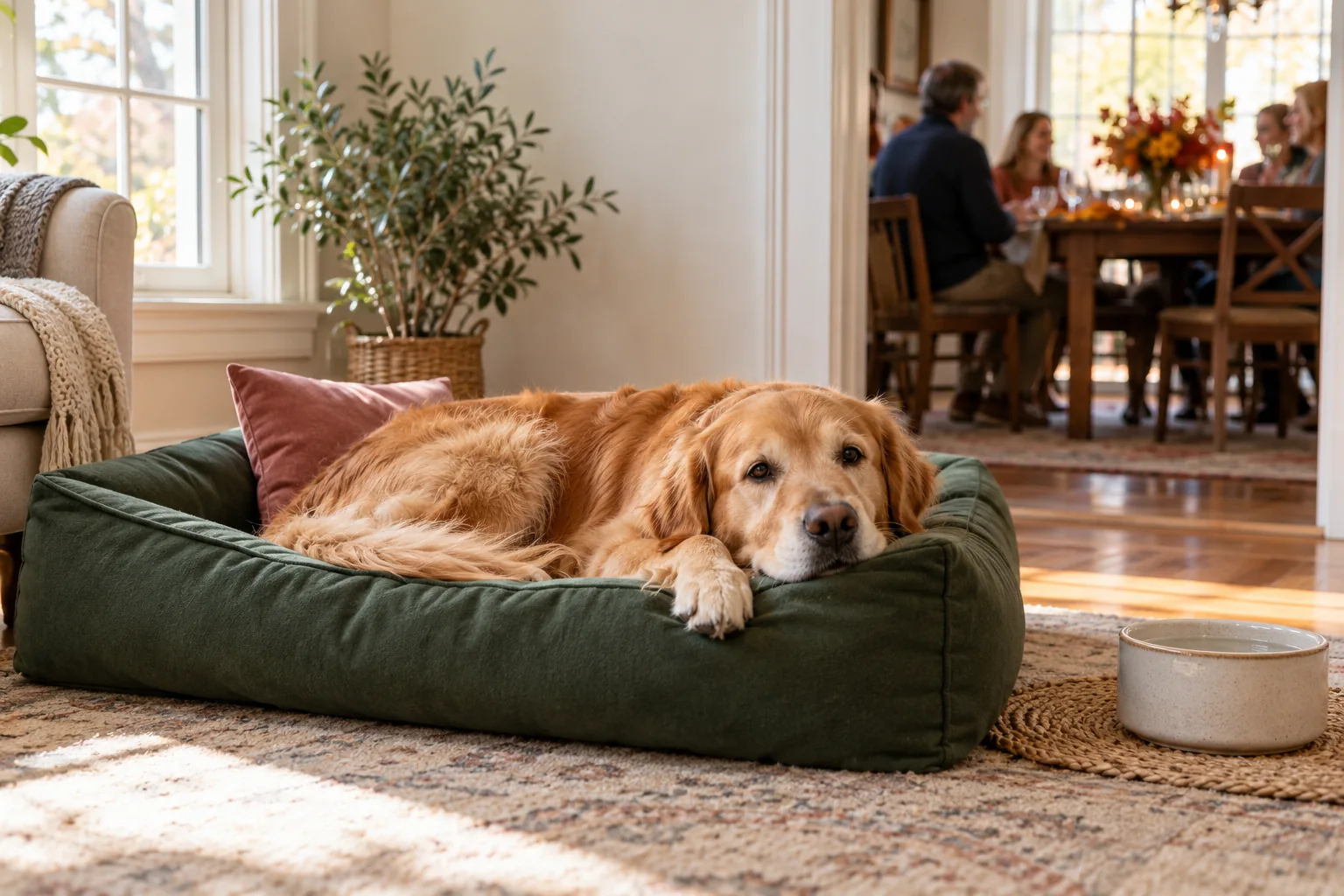
AAHA recommends a secure, quiet space away from arrivals and noise, with familiar bedding and water. Introduce it before the celebration. A closed room or suitable barrier can help manage access; check that your dog is comfortable with the arrangement.
Use your dog’s existing bed and bowl. You do not need a themed holiday setup. Walk through the plan when the house is quiet: where will water go, who checks in, and how will children know to leave the dog alone? A sign on the door can help adults remember the rule, but it does not replace supervision.
If separation makes your dog distressed, do not use the party as a first trial of a new confinement method. Arrange a quieter celebration, a familiar caregiver or professional advice in advance. Give the dog space to move away from interactions; visitors do not need a greeting.
Source: AAHA: Thanksgiving safety, quiet spaces and visitors.
Set one clear food rule for everyone
The simplest guest rule is to keep the dog on their normal food. AAHA identifies bones, rich fatty dishes, onions, garlic, grapes, raisins, chocolate, alcohol and xylitol as holiday hazards. Keep serving dishes, leftovers and trash out of reach.
Put a small labeled container of the dog’s usual permitted reward food with the designated caregiver if appropriate for their diet. This avoids each guest offering “just a little.” Ask visitors to store bags and coats out of reach, including bags containing medications or sweets.
For suspected poisoning, contact your veterinarian or an animal poison service promptly. Keep the ingredient list or packaging and describe what happened; do not wait for symptoms or attempt home treatment without veterinary direction.
Three dog rules to share with guests
- Ask before feeding. Leave food decisions to the owner rather than offering table scraps or unplanned treats.
- Let the dog take space. Allow a choice about greetings and keep the resting area undisturbed. Adults should supervise children around the dog.
- Keep outside doors secure. Check with the person on dog duty before arrivals, departures or trips to the car.
Choose one responsible adult to coordinate dog duty and name a backup. Put their names beside the guest message so a reminder leads to an actual person who can help.
Source: AKC: planning for holiday guests and assigning dog-care responsibility.
A message you can send before the visit
“We’re keeping our dog’s day calm. Please leave feeding to us, put bags on the shelf and check with us before opening the outside door. The dog’s bed area is a quiet zone, especially for children. We’ll let you know if they want to say hello. Thanks for helping!”
Adapt the locations and names to your home. Make the request practical: tell guests where coats go and who to ask about the dog. If a child is visiting, speak to the supervising adult too.
At the door, use a short reminder rather than repeating the whole message: “The dog is resting; please come straight through and close the door.”
Finish with a five-minute household reset
- Clear plates, serving dishes and accessible trash.
- Check the dog’s water and arrange a calm bathroom break.
- Confirm who is supervising while guests leave.
- Return food, equipment and care notes to their usual places.
Use this simple planning card: Door person: ___ · Dog’s resting place: ___ · Next break: ___ · Food cleanup: ___ · Backup caregiver: ___. Copy it onto paper or print this guide. If someone else will care for your dog, use our sitter handoff checklist to record the details they actually need.